🦃 From Scraps to Simmering Comfort 🦃
How I Make Golden Turkey Broth Every Thanksgiving
There’s something deeply comforting about turning what most people throw away into something warm, nourishing, and downright magical.
Every Thanksgiving night, after the dishes are washed and everyone is slipping into food-coma naps, I put on a cozy sweater, gather up my leftover turkey bones, and start a pot of broth that fills our whole house with comfort.
It’s one of my favorite quiet traditions — a simple, steady kindness to my future self.
And friend… it’s so easy.
If you’ve never made homemade broth from your turkey carcass, you are about to fall in love with this process. You don’t need special equipment, fancy ingredients, or hours hovering over the stove. Just a leftover turkey, a roaster, crockpot, instant pot, or stockpot, and a handful of scraps you already have on hand.
🍜 Why Make Your Own Broth?
Because it tastes better than anything in a box — richer, deeper, gently smoky if your turkey was smoked — and costs almost nothing.
And once you taste it in soups, noodles, rice, gravies, or your January homemade chicken & dumplings… mercy. You’ll never skip this step again.
🌿 What Goes Into My Broth
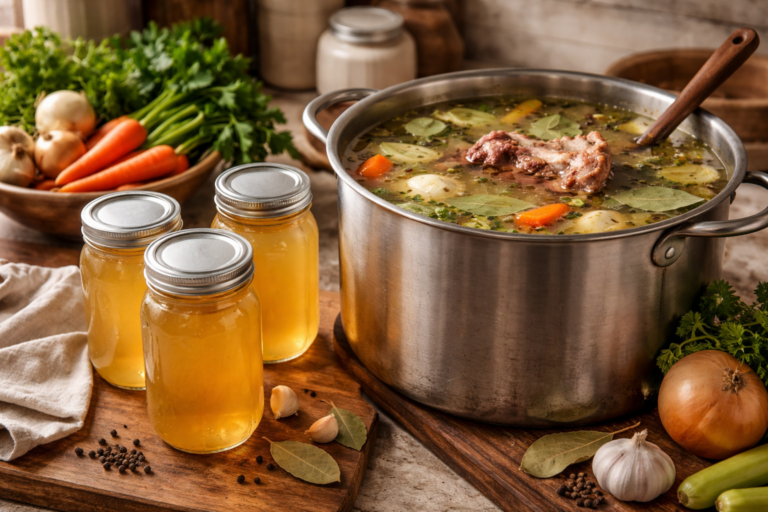
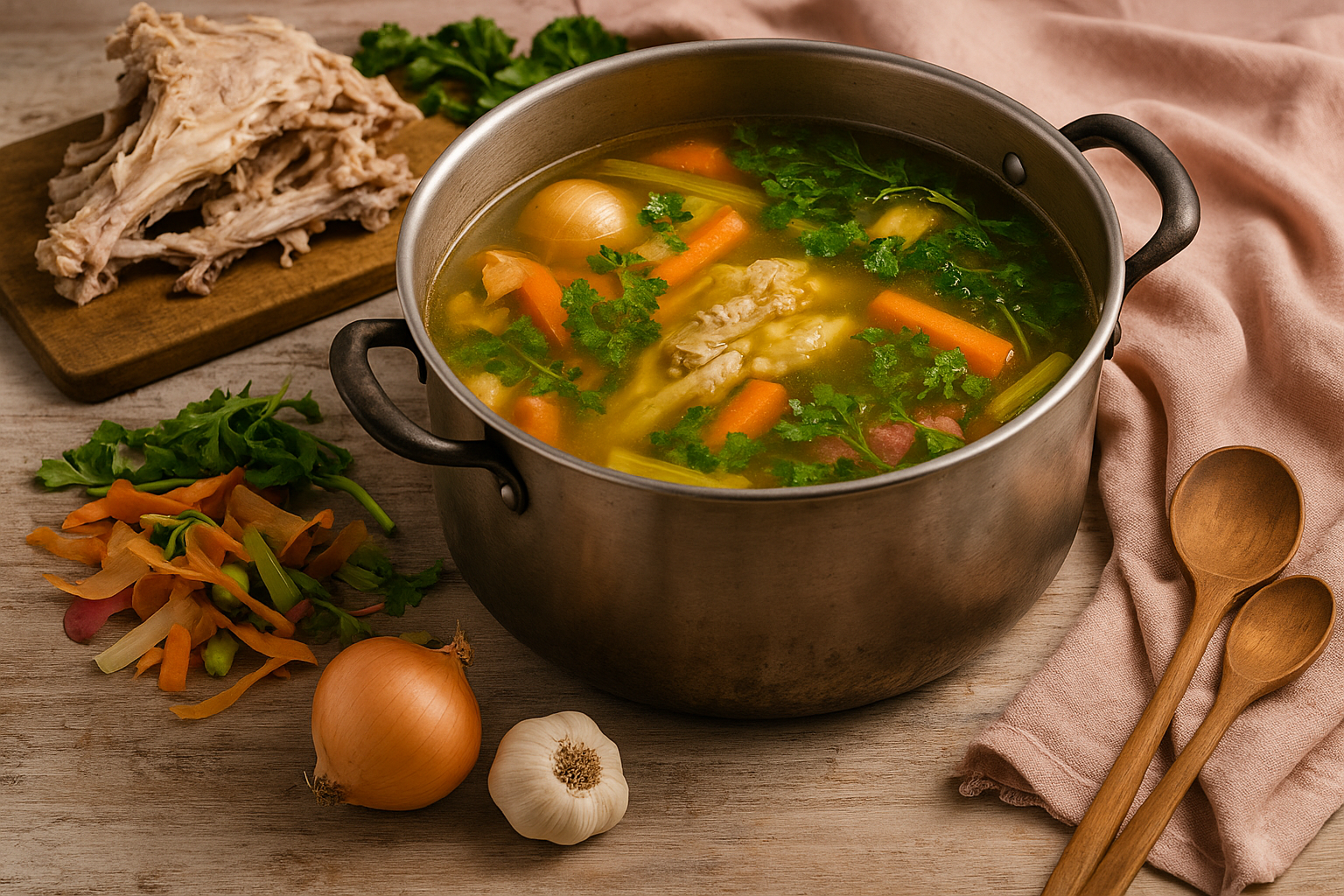
I keep a freezer bag of veggie scraps and add to each time, I peel a carrot, chop an onion, dice some celery. This makes it even easier. Here’s exactly what I added this year:
- The whole leftover smoked turkey carcass
- Onion ends and skins
- Garlic – whole cloves or trimmings
- Carrot peels + ends
- Celery tops + leaves
- Parsley stems
- A splash of apple cider vinegar to help pull minerals from the bones
- Peppercorns, bay leaf, and a small pinch of salt
If you keep a “scrap bag” in your freezer like I do, pour it right in. Otherwise, just use what you have!
🍲 How to Make Turkey Broth (Four Ways)
1. Roaster Oven (My Favorite Overnight Method)
Perfect for big batches and a hands-off simmer.
- Place carcass and veggies in roaster.
- Add water until everything is covered.
- Set to 200°F.
- Let simmer 12–16 hours.
- Strain, cool, skim, and store.
The house smells like comfort when you wake up. ✨
2. Crock-Pot / Slow Cooker
Beautiful for smaller batches.
- Break up carcass to fit.
- Add scraps + aromatics.
- Fill with water to the top.
- Cook on LOW for 12–18 hours.
- Strain and cool.
3. Instant Pot (If You Need It Fast!)
You won’t get the slow-cooked depth of an overnight simmer, but it still turns out wonderfully rich.
- Add bones + scraps.
- Fill to Max Fill line.
- Add aromatics + vinegar.
- Pressure cook 120 minutes.
- Natural release completely.
- Strain and store.
Tip: If you have time, run the strained broth on Sauté for 20–30 minutes to deepen the flavor.
4. Stovetop Simmer
Classic and cozy.
- Combine everything in your biggest pot.
- Cover with water.
- Bring to a gentle simmer, not a boil.
- Simmer 6–10 hours, adding water if needed.
- Strain, cool, and skim.
🍗 My Overnight Method (Hands-Off & Perfect Every Time)
I cook my turkey in a Roster Oven, so when we are done and the last bit of meat has been carved off, my roaster is ready to serve me again. I set my roaster oven to 200°F, nestle everything inside, add enough water to cover the bones, and let it gently bubble away all night.
By morning, the house smells like pure comfort.
Timing that works beautifully:
- Start around 5:00–6:00 PM – Perfect timing after Thanksgiving Dinner
- Let simmer 12–16 hours
- Strain in the morning
- Cool, skim, and get ready to store or pressure-can
🧂 Seasoning Tip
Don’t over-season now.
Salt your broth lightly and season the final dishes instead. A little goes a very long way once it reduces.
How to Store Your Broth
After straining:
- Refrigerate for up to 5 days
- Freeze for up to 6 months (leave headspace!)
- Pressure-can for shelf-stable jars (instructions below)
It will turn wonderfully gelatinous — that means you did it right!
Pressure Canning Instructions
Turkeys are low-acid, so broth must be pressure-canned.
Here’s the safe, USDA-recommended process:
What You’ll Need
- Hot strained broth
- Clean, hot jars
- New lids + rings
- Pressure canner (not an Instant Pot)
Steps
- Heat jars in simmering water and keep them hot.
- Bring broth to a boil, then reduce to a simmer.
- Fill jars with hot broth, leaving 1 inch headspace.
- Remove air bubbles and wipe rims.
- Apply lids and rings (finger-tight).
- Place jars in pressure canner with 2–3 inches of simmering water.
- Lock lid and let vent for 10 minutes.
- Process at 10 pounds pressure (or follow your altitude chart):
- Pints: 20 minutes
- Quarts: 25 minutes
- Turn off heat and let pressure return to zero naturally.
- Remove jars, cool 12–24 hours, then check seals.
Your jars should be golden, clear, and absolutely beautiful.
How I Use My Broth All Winter
- Soups: chicken noodle, vegetable, turkey & rice
- Dumplings (our favorite!)
- Rice or quinoa
- Gravy
- Pot pies
- Sipping mugs when someone has the sniffles
- January “reset cooking” — warm, simple, comforting
It’s like bottling up a little bit of Thanksgiving comfort for the whole winter season. 💛
🌸 Mrs. Clay’s Tip
Don’t worry about having the “perfect” mix of vegetables. Broth is one of the most forgiving things you can make. If all you have are onion ends and a few celery leaves, that’s enough. If you have a freezer bag of mixed scraps, even better. This is a recipe that welcomes what you already have — and somehow always turns out beautifully.
And if your turkey was smoked? Your broth will have the most wonderful, deep flavor with zero extra effort. Let the bones do the work for you.
✨ A Thought to Close the Day
There is something tender about these quiet, after-Thanksgiving moments — when the kitchen light is soft, the house feels still, and the carcass of yesterday’s feast becomes tomorrow’s comfort.
Making broth is more than a recipe; it’s a gentle reminder that even the leftover pieces of our lives can become something warm and nourishing.
As the pot simmers, may your home be filled with gratitude for what was, and hope for all that’s ahead.